Most restaurants know how many orders they received yesterday. Fewer know how many of those customers will ever order again.
That distinction is expensive.
According to Bloom Intelligence’s 2026 restaurant benchmarks, drawn from more than 1,000 locations, 78.12% of guests had visited only once. Meanwhile, just 8.26% of guests, those with four or more visits, generated 52.91% of all visits.
Put differently: of every 1,000 first-time customers a restaurant pays to acquire, around 780 never come back. The small group that does is carrying more than half the business.
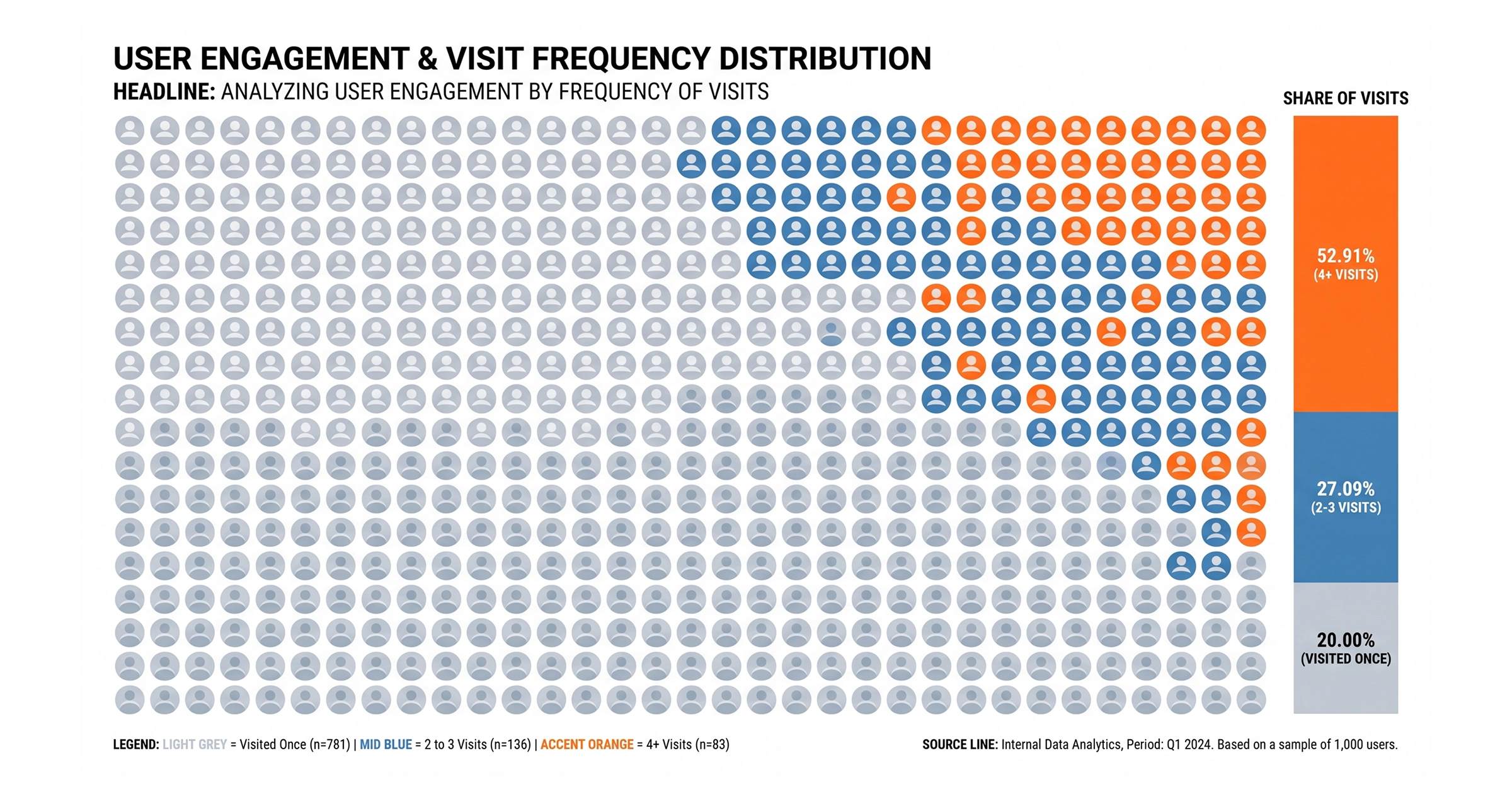
These figures reflect Bloom’s network rather than the whole industry, but the shape of the problem is familiar. Restaurants spend heavily to win a first order. What happens after it decides whether they build a relationship or have to buy that customer’s attention all over again.
Here are five mistakes that quietly drain repeat business, and what the research says about fixing them.
1. Sending the Same Message to Every Customer
A regular who orders every Friday and someone who hasn’t visited in three months have very different relationships with your restaurant. Sending both the same promotion ignores that, and customers notice.
DoorDash’s 2026 Restaurant Industry Trends Report, a Dynata survey of 3,001 US consumers, found that 65% said a restaurant remembering their preferences would affect how often they choose it, and 63% said a personalized recommendation or follow-up had prompted them to return in the previous six months. Self-reported, yes, but the signal is consistent: customers reward being recognized.
The fix: segment by behavior
Use ordering history to split customers into a few groups: regulars, first-timers, lapsed customers, high spenders. Then match the message to the relationship. Regulars hear about a new menu item first. Lapsed customers get a reason to return. First-timers get an introduction to the rewards program, not a generic 10% off.
Start with two or three segments and compare their repeat-order rate against customers on the general list. The goal isn’t personalization for its own sake; it’s finding out whether relevance produces more second and third orders.
2. Relying on Discounts to Create Loyalty
Discounts work. The question is what happens when the discount ends.
The same DoorDash survey found 87% of consumers said a credit, discount or perk had influenced them to reorder. That makes incentives a legitimate tool. It doesn’t make them a loyalty strategy.
Deloitte’s 2022 research on restaurant loyalty found that 67% of members belonged to two or more programs, and 86% rated transactional benefits as important. Customers value rewards, but they happily collect them from several competing restaurants at once. A discount buys a transaction, not preference. Deloitte’s advice: build on transactional perks with experiential ones, such as exclusive access, priority service and personalization.
The fix: spend discounts where they do a job
Reserve discounts for converting a first-timer into a second-timer, or re-engaging someone who has gone quiet. For regulars, test value that doesn’t cut margin: early access to new items, a free upgrade on their usual order, a milestone acknowledgement, an invitation to a tasting.
The test of loyalty is simple: do customers return when there’s no coupon in the message?
3. Having No Strategy for the Second Order
A first-time customer has tried your food. That doesn’t mean they’ve formed a habit.
Bloom’s benchmarks show only 21.88% of tracked guests recorded more than one visit. Among those who returned exactly once, 42.3% did so within 30 days, 57.6% within 60 and 69.0% within 90. Nearly a third took longer than 90 days, by which point most restaurants have stopped talking to them.
The fix: build a first-to-second-order journey
- Within 24 hours: a thank-you and a one-line introduction to the loyalty
- No second order by day 30: a reminder built around what they ordered, or a relevant
- No second order by day 60: a targeted return offer, the one place a discount earns its
Adjust the intervals to your ordering cycle; a coffee shop and a steakhouse run on different rhythms. Track the share of first-timers who order again within 30, 60 and 90 days, and where possible hold back a small group that receives no follow-up so you can see whether the journey changes behavior or just rides along with it.
4. Communicating Without a Consistent Plan
Many restaurants either go silent for weeks or send a flurry around a slow period. Neither builds a habit, and customers are more receptive to regular contact than operators assume.
Popmenu’s 2026 Restaurant Trends Report, based on a survey of 1,000 US consumers, found that 48% wanted to hear from their favorite restaurants at least weekly and another 16% every other week. Yet Popmenu’s survey of 328 restaurant leaders found only 50% planned to send emails or texts weekly. Half of restaurants are communicating less often than two-thirds of their customers would welcome.
The fix: pick a cadence, then earn it
A reasonable starting point to test: one email a week, anchored to a real reason to write (new item, seasonal special, event, loyalty update), and two to four texts a month reserved for time-sensitive offers. Build the calendar around those reasons first. If you can’t say why a customer should care about a message, it shouldn’t go out.
Review monthly: unsubscribes, clicks, orders in the 72 hours after each send, and repeat-purchase rate among recipients. Increase frequency where segments respond; pull back where opt-outs climb.
5. Tracking Activity Without Measuring Results
An email gets 500 opens. A text gets 100 clicks. How many customers actually ordered?
Engagement and business performance are not the same thing, and the gap between them is where budgets disappear. Popmenu found that 20% of operators rarely or never track marketing’s impact on traffic, revenue and growth. One in five is spending without knowing what it buys.
The fix: judge campaigns on behavior, not attention
| Metric | What it tells you |
| Repeat purchase rate | How many customers order again |
| Second-order conversion | How many first-timers become repeat customers |
| Time between orders | How frequently customers return |
| Campaign-attributed orders and revenue | What can be linked to a campaign |
| Unsubscribe rate | How many recipients opt out |
One distinction matters most: attributed revenue is not incremental revenue. A regular who clicks a promo link may have ordered anyway. Where practical, compare a campaign group against a similar group that didn’t receive it. A campaign with fewer clicks but more repeat orders is worth more than one with high engagement and nothing at the register.
The Innowi Perspective: Connect the Data to the Customer
Every fix above depends on knowing what a customer did after their first order. Most restaurants have that information; it’s just scattered across ordering, payments, loyalty and marketing systems that don’t talk to each other.
Operators know this is the bottleneck. DoorDash and SevenRooms’ 2026 research found that 83% of surveyed operators expected that connecting online ordering, delivery, reservations and guest data would improve profitability. An expectation rather than a measured result, but a near-unanimous one.
Innowi runs POS, online ordering, loyalty, and email and SMS marketing on a single customer record, so a restaurant can see who ordered once and never returned, who orders every Friday, and who has gone quiet, and reach each of them with a message that fits.
That same connected data turns your best customers into your most efficient acquisition channel. With the Innowi Referral Program, a customer who has just ordered can share a link that gives a friend $5 off their first order and earns the referrer $5 in credit. The friend joins your rewards program the moment they claim it, so their second-order journey starts on day one, and you pay roughly $10 per new customer only after that first order is fulfilled, not a commission on every order.
Technology alone doesn’t create retention. But without connected data, retention marketing is guesswork.
The Customer You Already Have
Bloom’s benchmarks show how much a small group of repeat visitors contributes to traffic. DoorDash’s research shows how much consumers value recognition. Popmenu’s findings show customers are more open to regular contact than most restaurants provide, while one in five operators still isn’t measuring whether any of it works.
Restaurants don’t need to abandon acquisition. They need to give the second order the same attention they give the first.
Your next customer is probably already on your list. Do you know what would bring them back?
See how Innowi connects POS, loyalty and marketing → Book a demo
Related reading: [Introducing the Innowi Referral Program: Refer a Friend & Earn](https://innowi.com/innowi-referral-program/)
Sources
- Bloom Intelligence (2026). Restaurant Benchmarks 2026: Ratings, Review Replies and Retention From 1,000+ Locations. Published June 11, 2026; data recomputed September 2026.
- DoorDash (2026). From the Doorstep to the Dining Room: 2026 Restaurant Industry Trends Report. Published May 18, 2026. Dynata survey, March 2026, of 3,001 US consumers and 509 US restaurant operators.
- Deloitte (2022). Unlocking the Value of Loyalty Programs for Restaurants. Based on Deloitte’s 2022 annual survey on brand loyalty.
- Popmenu (2026). 2026 Restaurant Trends to Watch. Surveys of 328 US restaurant operators (January 2026) and 1,000 US consumers aged 21+ (February 2026).
- DoorDash and SevenRooms (2026). Restaurant Industry Trends Report. Survey of 3,000 US consumers and 500 US operators, plus platform data (October 2025 to March 2026).